LEVEL 7 OF 18
Web Application Security
Understand and secure web applications and APIs.
Learn HTTP, sessions, authentication, APIs, input validation and web vulnerability defenses in MentorPulse Level 7, Web Application Security.
Recommended preparation: Level 6: Ethical Hacking. This public overview does not expose private learner records or require a login.
Cybersecurity skills and career relevance
Practice explaining web application risks and communicating actionable remediation.
The 18-level roadmap describes the full learning path. Published lessons, labs and projects are available in the app; remaining curriculum content is still in development. Access varies by plan.
Curriculum topics
- HTTP/HTTPS
- Cookies
- Sessions
- Authentication
- APIs
- REST
- GraphQL basics
- Input validation
- SQL injection
- XSS
- CSRF
- SSRF
- Access-control vulnerabilities
- File-upload vulnerabilities
- Path traversal
- Command injection
- API security
- JWT security
- OAuth concepts
- Secure coding
Level 7 module outline
- 1.HTTP
- 2.Web architecture
- 3.Authentication
- 4.Authorization
- 5.Input validation
- 6.Injection concepts
- 7.Session security
- 8.API security
- 9.Client-side security
- 10.Web security testing
This is the planned module outline, not a claim that every lesson position has been published.
Practice and portfolio directions
- Find and document vulnerabilities in a deliberately vulnerable web application.
Project directions come from the roadmap. Availability and requirements for individual exercises are shown in the signed-in learning workspace.
Referenced study tools: Burp Suite, OWASP ZAP, Browser developer tools. These references do not imply affiliation or certification.
Related learning screenshots
Historical interface examples; publication counts and learner progress may differ from the current app.
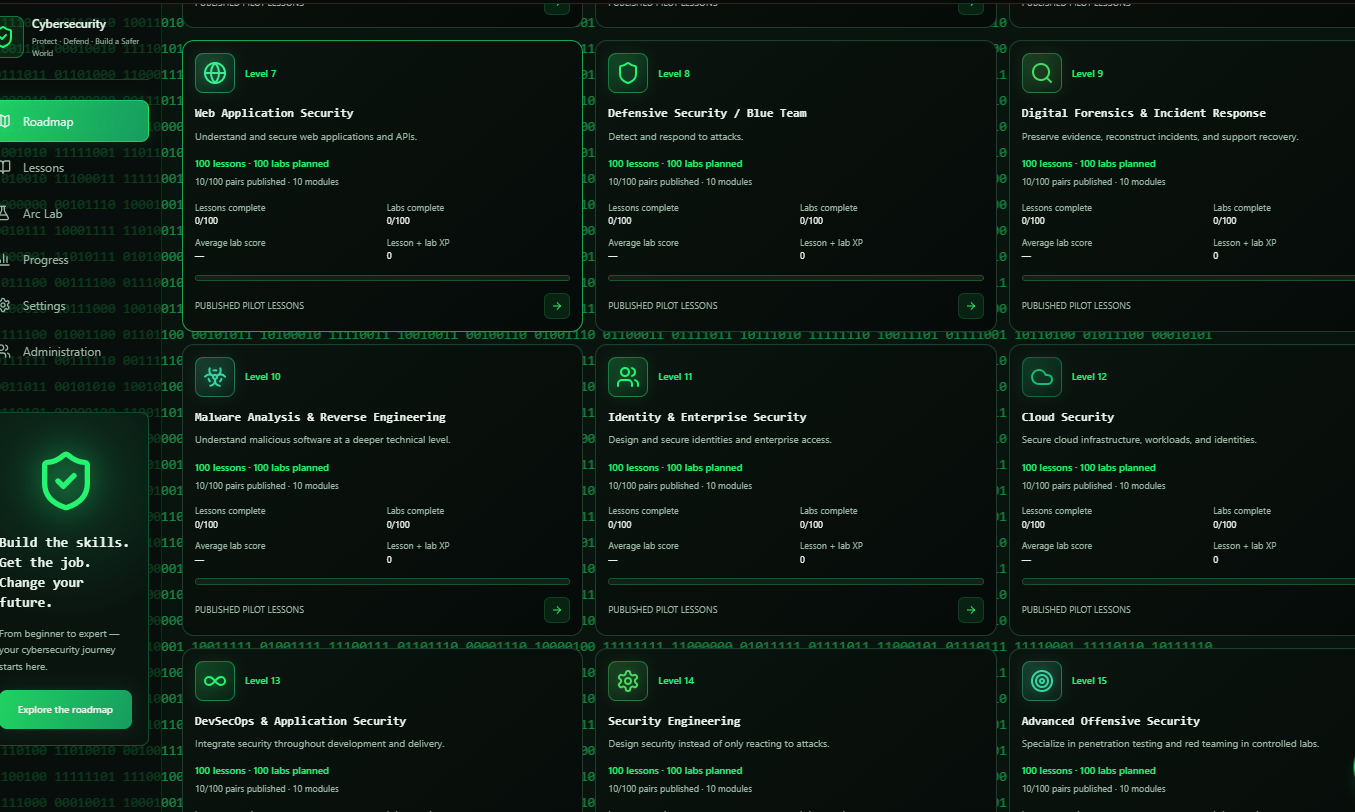
Cybersecurity roadmap: professional specializations
Professional study areas connect web and enterprise security with investigation, cloud and engineering.
Cybersecurity education and career development, not a certification, accreditation or employment guarantee. External tools and learning resources are referenced for study, not as partnerships. Practice only in isolated environments or with explicit authorization.