LEVEL 6 OF 18
Ethical Hacking
Learn how attackers discover and exploit weaknesses in authorized environments.
Explore ethical hacking, OSINT, reconnaissance, authorized assessments and responsible reporting in Level 6 of the MentorPulse cybersecurity roadmap.
Recommended preparation: Level 5: Cybersecurity Fundamentals. This public overview does not expose private learner records or require a login.
Cybersecurity skills and career relevance
Develop scoped assessment and evidence-reporting skills using only authorized training environments.
The 18-level roadmap describes the full learning path. Published lessons, labs and projects are available in the app; remaining curriculum content is still in development. Access varies by plan.
Curriculum topics
- Reconnaissance
- OSINT
- Scanning
- Enumeration
- Vulnerability discovery
- Web reconnaissance
- Network reconnaissance
- Exploitation concepts
- Privilege escalation
- Password attacks
- Wireless security
- Social-engineering awareness
- Post-exploitation concepts
- Reporting
- Remediation
Level 6 module outline
- 1.Ethical hacking methodology
- 2.Reconnaissance
- 3.Enumeration
- 4.Vulnerability discovery
- 5.Exploitation fundamentals
- 6.Web testing fundamentals
- 7.Network security testing
- 8.Privilege escalation concepts
- 9.Post-exploitation concepts
- 10.Reporting and remediation
This is the planned module outline, not a claim that every lesson position has been published.
Practice and portfolio directions
- Conduct a complete authorized penetration test against a lab environment.
Project directions come from the roadmap. Availability and requirements for individual exercises are shown in the signed-in learning workspace.
Related learning screenshots
Historical interface examples; publication counts and learner progress may differ from the current app.
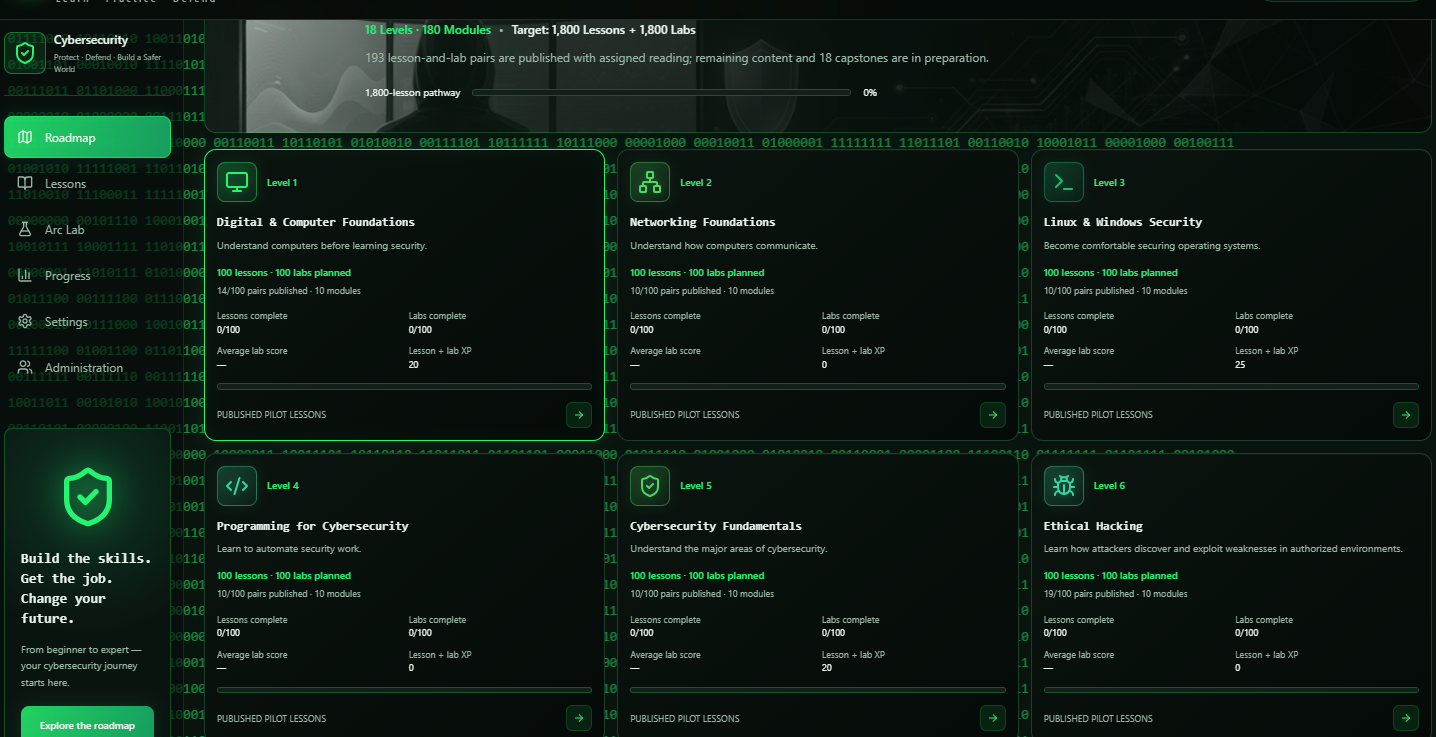
Cybersecurity roadmap: foundations
The first six roadmap levels introduce systems, networks, scripting and cybersecurity foundations.
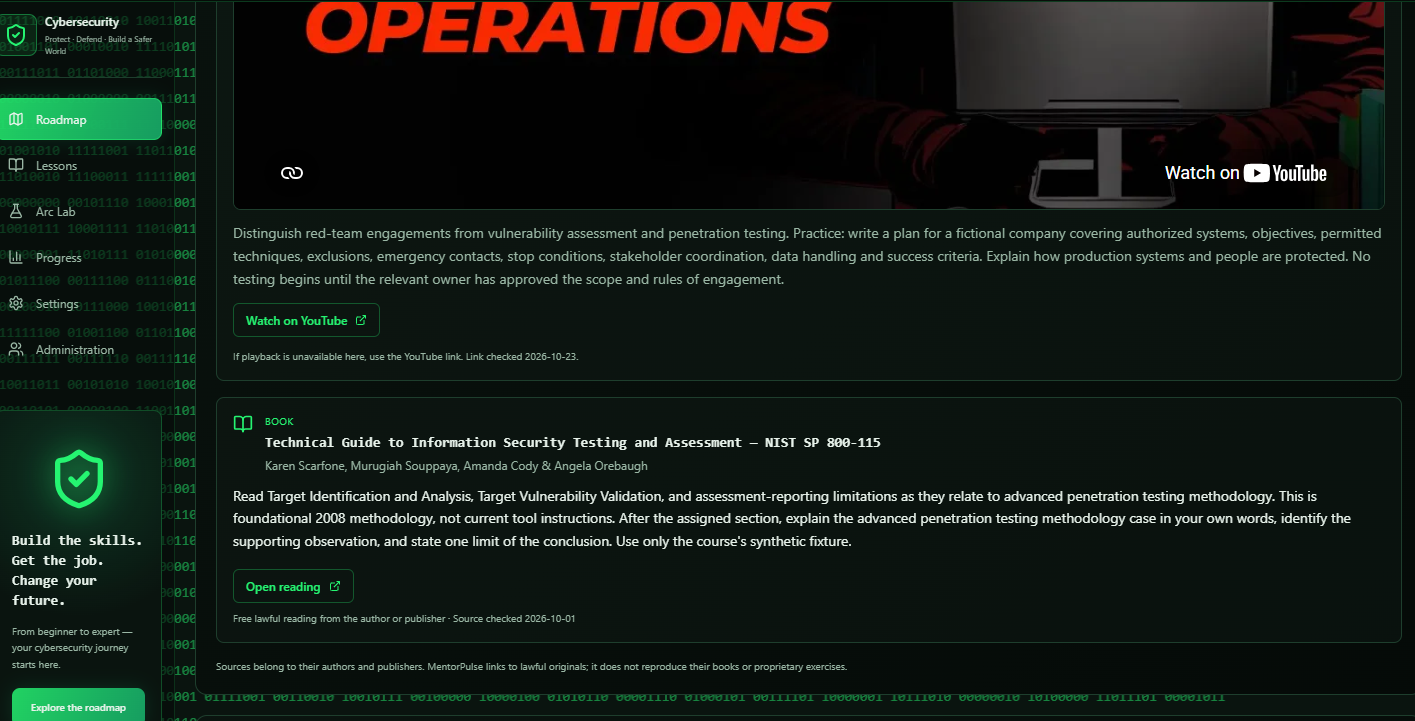
Authorized offensive-security study resources
Assessment study emphasizes authorization, scope and reporting. External publications and creators are references, not certifications or partners.
Cybersecurity education and career development, not a certification, accreditation or employment guarantee. External tools and learning resources are referenced for study, not as partnerships. Practice only in isolated environments or with explicit authorization.